PM Modi votes first in VP election faceoff
PM Modi casts first vote in vice president election between CP Radhakrishnan and Sudershan Reddy
Prime Minister Narendra Modi cast the first vote in the Vice Presidential election held on Tuesday. The election comes after the Vice Presidential seat became vacant on July 21, following the resignation of Jagdeep Dhankhar due to health reasons. This vote marks the beginning of the official process to fill the important constitutional post.
Union ministers Kiren Rijiju and Ram Mohan Naidu, along with Shiv Sena MP Shrikant Shinde, were appointed as election agents for the Vice Presidential polls. They are responsible for overseeing the election process and ensuring that all procedures are correctly followed.
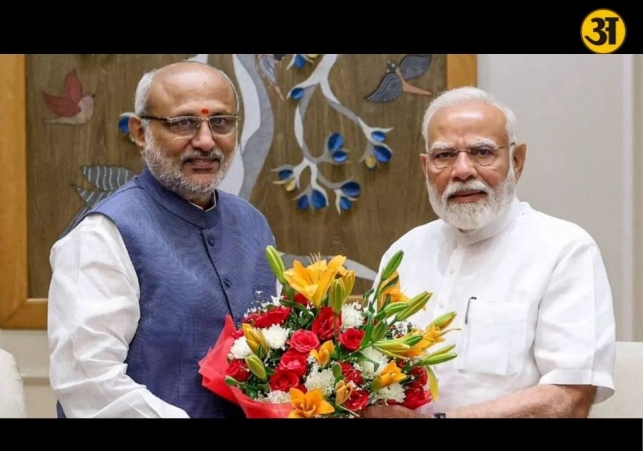
The main contest is between the ruling NDA’s candidate CP Radhakrishnan and the opposition’s candidate B Sudershan Reddy. The BJP-led NDA enjoys a clear advantage in the election, especially after Dhankhar’s unexpected resignation. Political analysts say that this contest is significant for both alliances, as it will reflect their strength in Parliament.
Election process and party preparations
Ahead of the vote, both the NDA and the opposition INDIA bloc held separate meetings in the Parliament complex to brief their MPs. During these sessions, leaders explained the election procedure, conducted mock polls, and emphasized the importance of voting carefully. While political parties generally guide their MPs, it is important to note that in the Vice Presidential election, MPs are not bound by party whips. Voting is done through a secret ballot, allowing members to make independent choices.
The Vice Presidential electoral college consists of 788 members, including 245 Rajya Sabha members and 543 Lok Sabha members. Additionally, 12 nominated Rajya Sabha members are eligible to vote. However, due to six vacant Rajya Sabha seats and one vacant Lok Sabha seat, the current strength of the college is 781. To win, a candidate needs a majority of 391 votes.
At present, the NDA holds 425 MPs, giving them a numerical advantage. The opposition has the support of 324 MPs. Interestingly, the YSR Congress Party (YSRCP), which has 11 MPs and is not formally aligned with either alliance, has decided to support NDA’s candidate, further strengthening Radhakrishnan’s position.
Significance of the Vice Presidential election
The Vice President of India is the second-highest constitutional authority after the President. In addition to performing the duties of the Vice President, the office-holder also serves as the Chairman of the Rajya Sabha. This means that the outcome of the election can influence the functioning of the Upper House of Parliament, including the discussion and passage of bills.
CP Radhakrishnan, representing the NDA, is a seasoned politician with experience in Parliament. His candidacy is backed by the ruling alliance’s strong numerical presence, giving him a clear path to victory. B Sudershan Reddy, supported by the opposition INDIA bloc, faces an uphill battle to secure enough votes. The election, however, is closely watched by political analysts, as it reflects not just numbers but the strategies and alliances of various parties.
Congress Rajya Sabha MP Jairam Ramesh recently commented on the situation, saying that former Vice President Jagdeep Dhankhar has maintained an “uncharacteristic silence” over the past 50 days since his resignation. Meanwhile, party leaders continue to mobilize their MPs and prepare for the final voting process.
The election agents appointed by the parties play a crucial role in guiding MPs through the voting process. They ensure that ballots are correctly filled, collected, and submitted according to parliamentary rules. The secret ballot system provides MPs the freedom to vote without fear of pressure, although party support remains influential.
ALSO READ: EnteroMix cancer vaccine: Russia claims full effectiveness
ALSO READ: Next-generation GST reforms aim to bring relief, says Modi government
Voting and outcome expectations
Prime Minister Modi casting the first vote symbolizes the official start of the Vice Presidential election process. As per the schedule, MPs will cast their votes throughout the day. After the counting, the winner is expected to be announced in Parliament.
The NDA’s lead in numbers, combined with YSRCP support, gives CP Radhakrishnan a strong edge. However, political experts note that secret ballots sometimes produce surprises. The opposition, while numerically weaker, aims to make a statement by consolidating its votes and negotiating support from smaller parties.
The result of the Vice Presidential election will not only determine the next Chairman of the Rajya Sabha but also signal the relative strength of the ruling NDA and the opposition INDIA bloc in Parliament. A smooth and transparent voting process is expected, with election agents closely monitoring the procedures to avoid any irregularities.
In conclusion, the Vice Presidential election is a key political event in India’s parliamentary democracy. PM Modi’s participation as the first voter highlights the importance of the election, while the NDA’s numerical advantage suggests a likely victory for CP Radhakrishnan. Nevertheless, the election process itself remains a vital exercise in transparency, democratic participation, and parliamentary procedure.
Related News